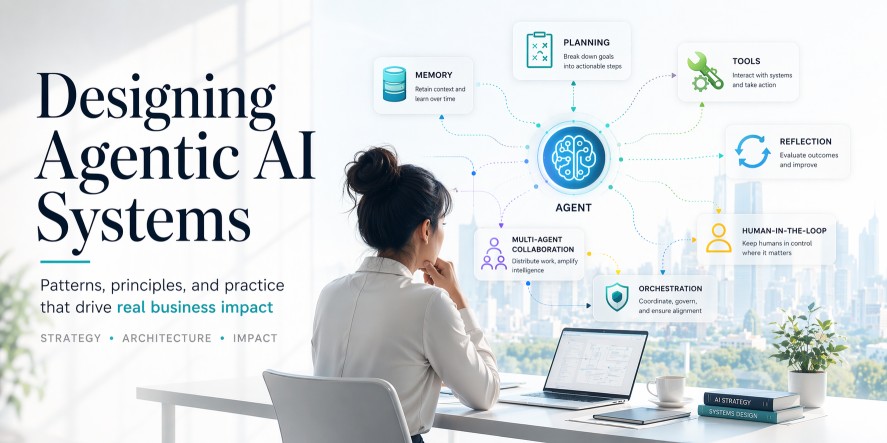
In the age of Agentic AI, the winners won’t be those with the biggest models — they’ll be the ones who architect their agents with battle-tested design patterns. These 10 reusable blueprints turn raw intelligence into reliable, scalable strategy engines that plan, act, reflect, retrieve, collaborate, and stay aligned with human judgment. Whether you’re automating competitive intelligence, orchestrating enterprise initiatives, or reimagining decision-making at scale, mastering these patterns is your strategic edge.
Agentic AI evolves passive systems into proactive ones that perceive, reason, decide, act, adapt, and learn autonomously. Without disciplined architecture, even powerful models hallucinate, drift, or fail under complexity. The 10 mature design patterns — drawn from production frameworks (LangGraph, CrewAI, AutoGen), research, and enterprise deployments — provide the structure needed for reliable autonomy.
In this strategic playbook, we explore all 10 patterns. Each includes a clear explanation, a professional visual diagram, a real-world strategic example, and the business leverage it unlocks. These patterns compose like LEGO blocks. Read through to the end for a decision framework that helps you select and combine them for maximum strategic impact.
Separate orchestration from execution.
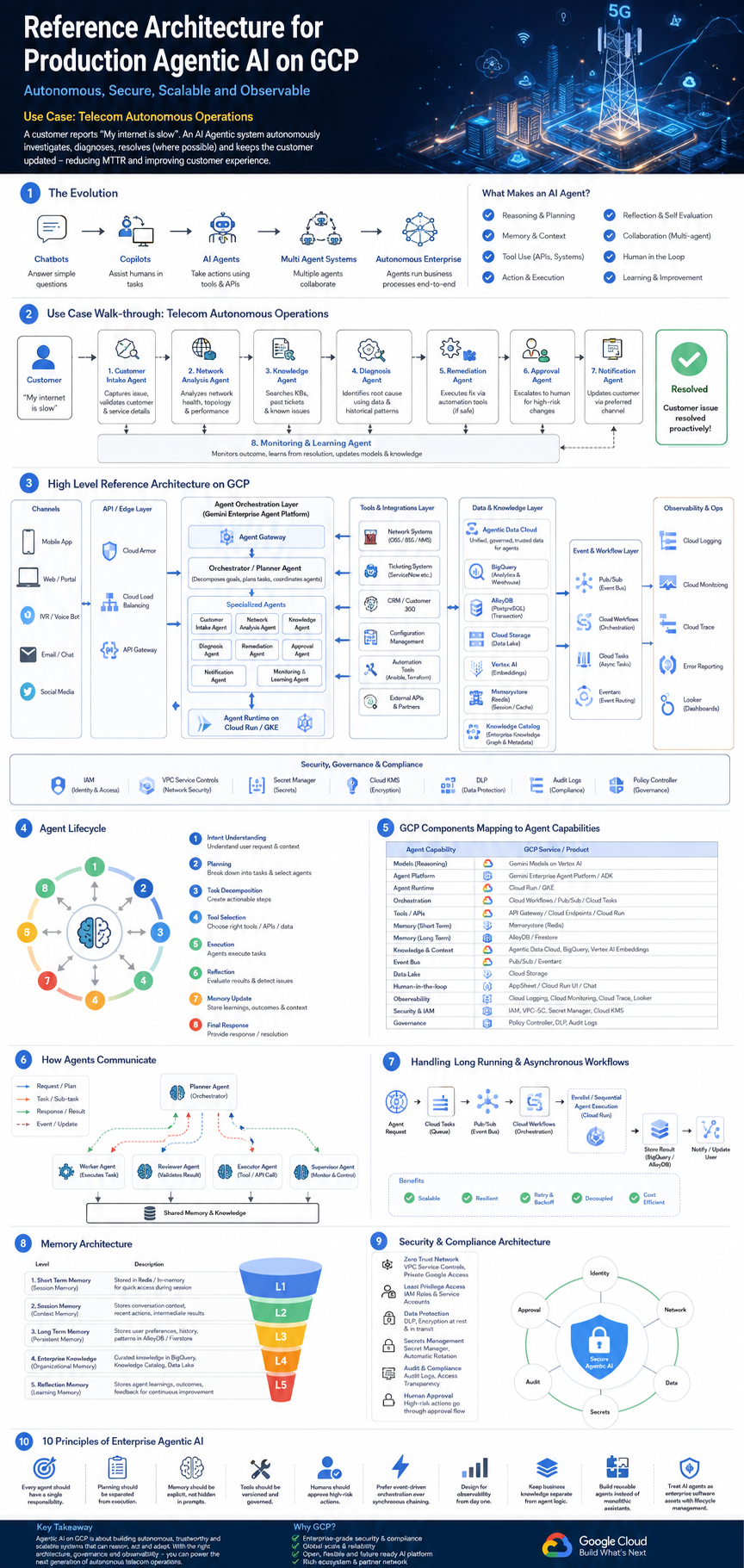
Connect models to tools and workflows.
Improve quality before humans see output.
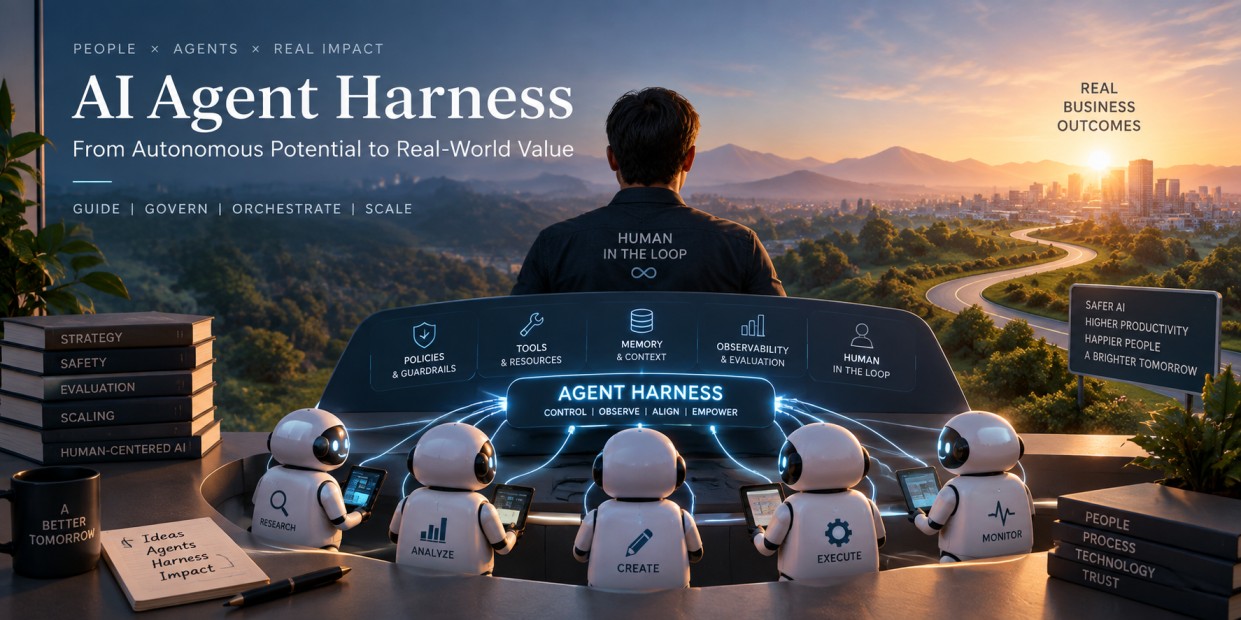
Keep autonomy aligned with oversight.
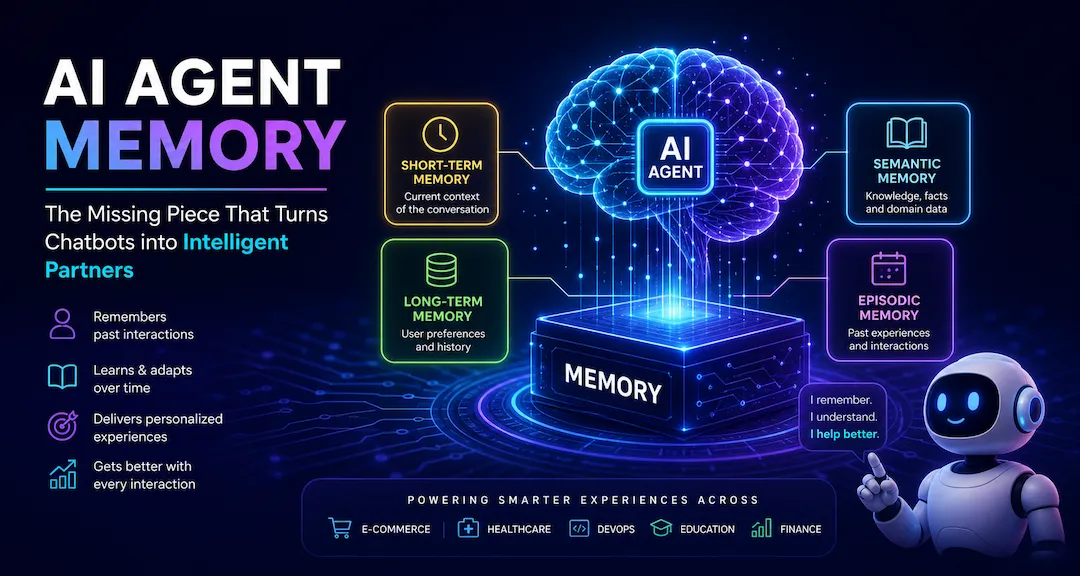
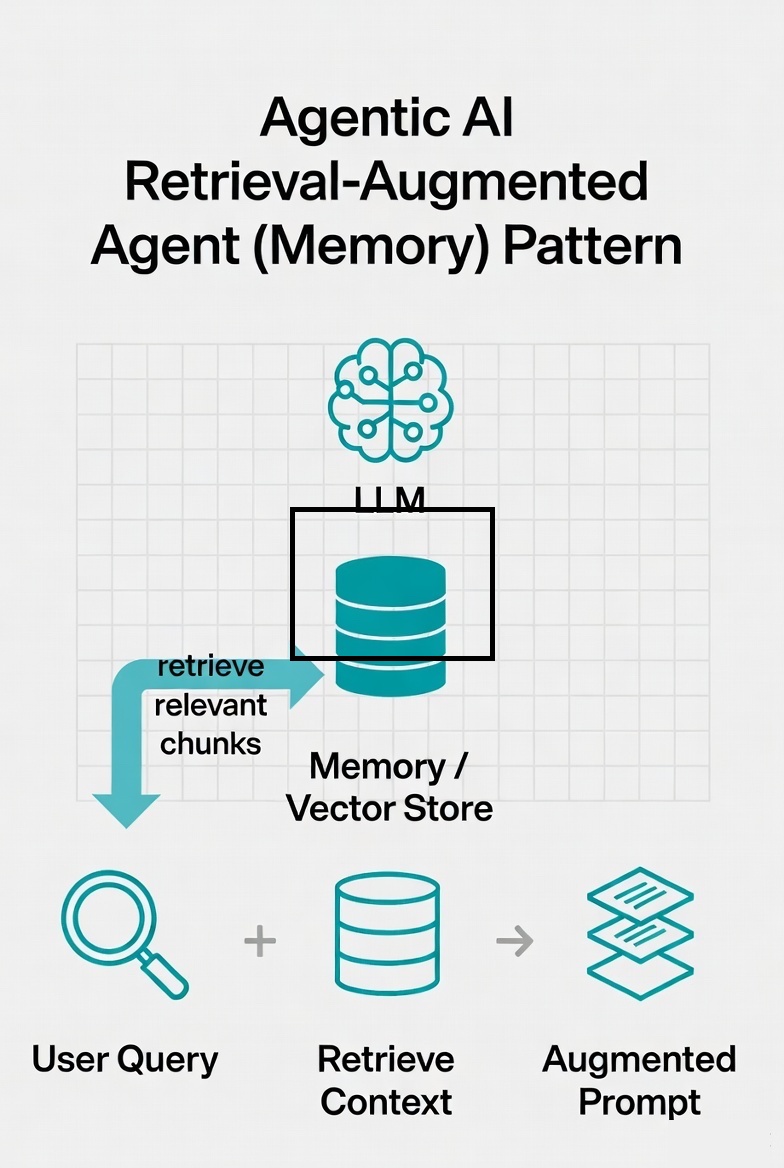
Retrieval-Augmented Agent (Memory) Pattern
What it is: Agents augment their reasoning with external knowledge retrieval (vector databases, knowledge graphs, or long-term memory stores) before or during execution. This grounds outputs in up-to-date or proprietary information, overcoming LLM context limits and knowledge cutoffs.
Real-world strategic example: A global investment firm’s Market Intelligence Agent retrieves the latest earnings transcripts, regulatory filings, and internal research notes from a vector store before analyzing a potential acquisition target. It surfaces nuanced risks missed by public data alone, enabling faster, more accurate deal theses.
Strategic payoff: Accuracy and relevance at scale. Essential for knowledge-intensive strategy work. Trade-off: Requires robust indexing and retrieval pipelines.
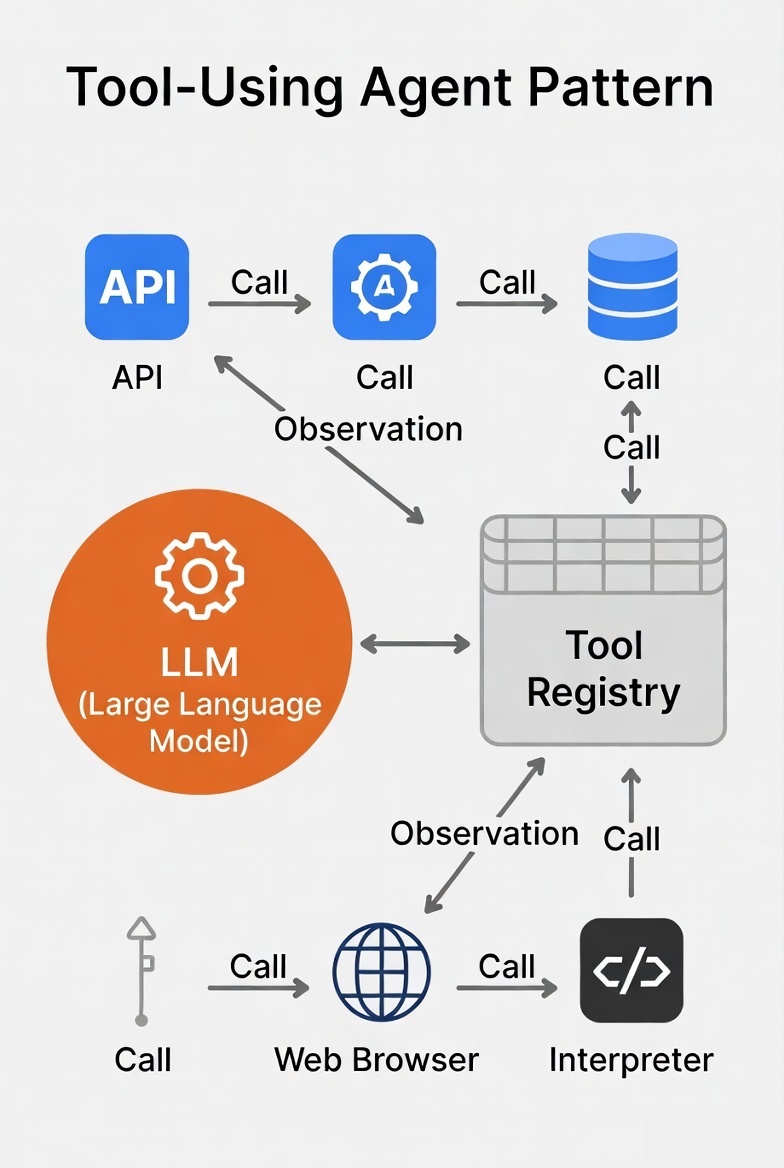
Tool-Using Agent Pattern
What it is: Agents access a registry of external tools (APIs, databases, code interpreters, browsers, internal systems) and dynamically select/execute them to extend capabilities beyond internal knowledge.
Real-world strategic example: A manufacturing company’s Supply Chain Agent detects a port strike via news tools, queries ERP for inventory impact, runs simulations via code interpreter, and triggers alternative supplier APIs - rerouting shipments autonomously and avoiding millions in losses.
Strategic payoff: Real-world execution power. Turns advisors into operators.
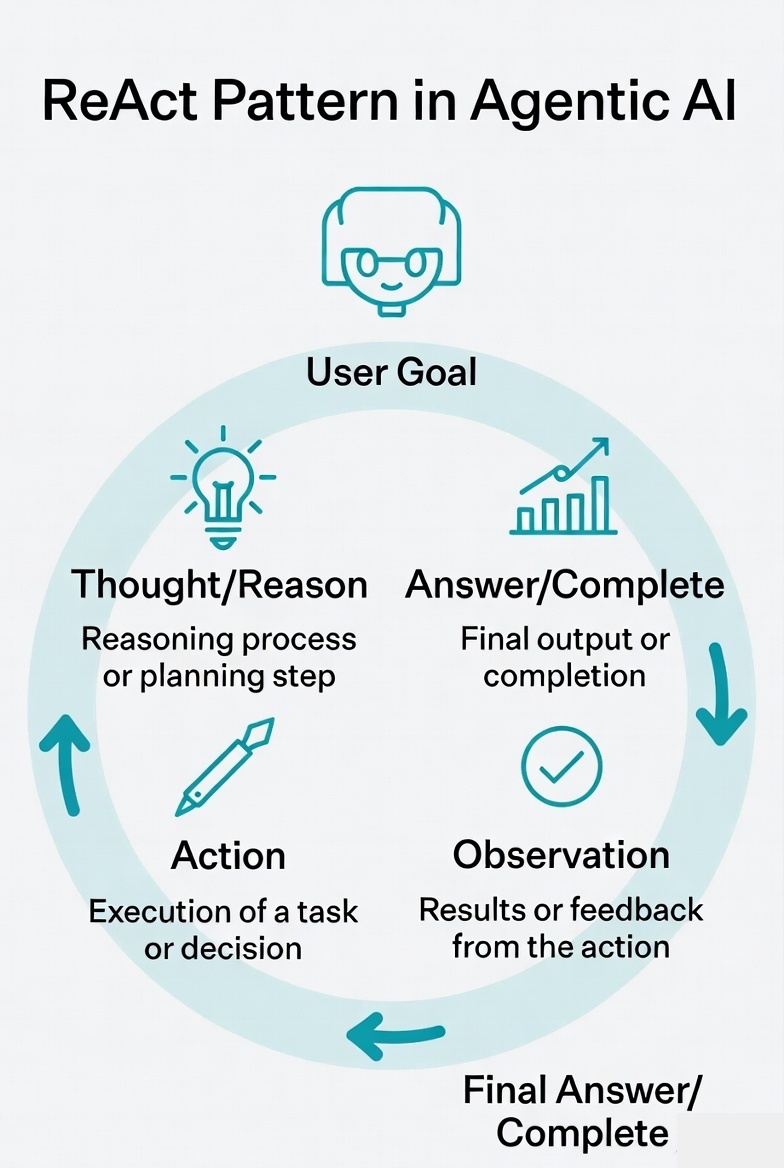
ReAct (Reason + Act) Pattern
What it is: The agent interleaves explicit reasoning (“Thought”), action via tools, and observation of results in a loop until the goal is achieved. It grounds decisions in reality and reduces hallucinations.
Real-world strategic example: A consulting firm’s Competitive Threat Agent reasons it needs funding data, acts by calling search + financial APIs, observes results, reasons again for regulatory gaps, and iterates to deliver a complete real-time SWOT.
Strategic payoff: Transparent, reliable execution for dynamic tasks.
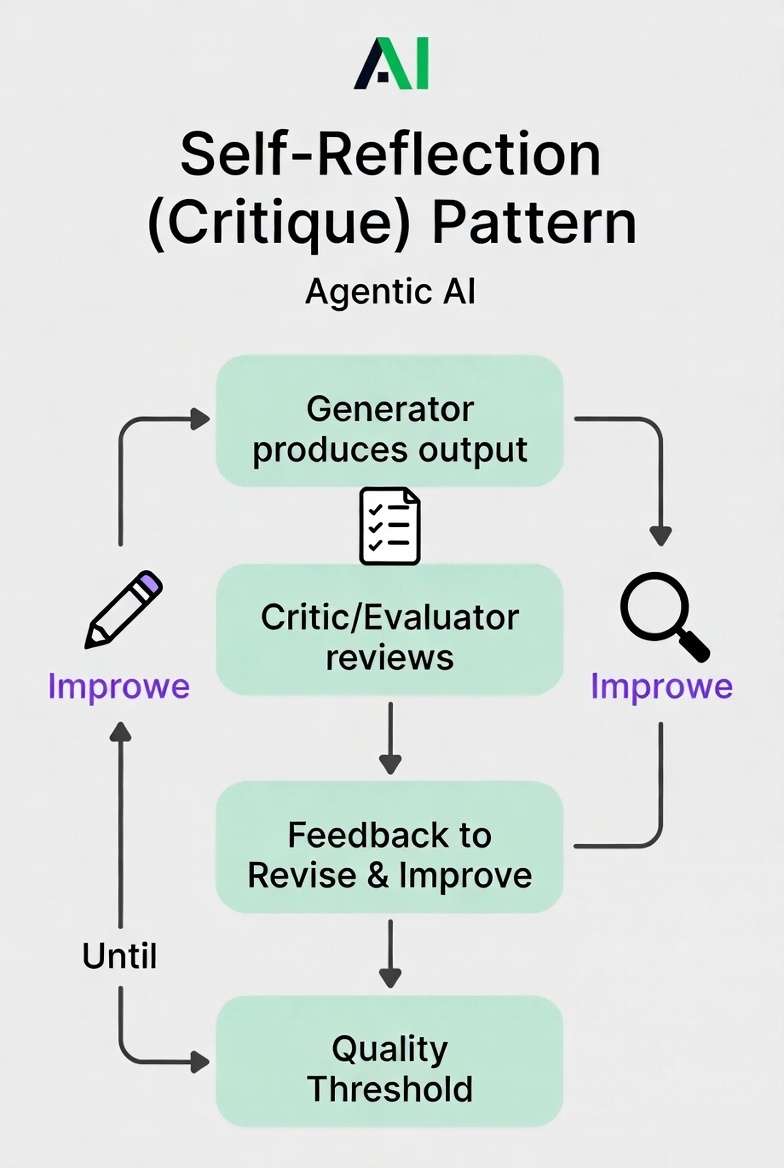
Self-Reflection (Critique) Pattern
What it is: The agent generates output, then critiques it against criteria (accuracy, risks, completeness, alignment), revises iteratively until a quality threshold is met. This mimics metacognition.
Real-world strategic example: A bank’s M&A Thesis Agent drafts an acquisition analysis, reflects on overlooked Asia regulatory risks and optimistic assumptions, revises over cycles, and delivers a board-ready document with quantified mitigations.
Strategic payoff: Superior quality and risk reduction for high-stakes outputs.
Planning (Orchestration) Pattern
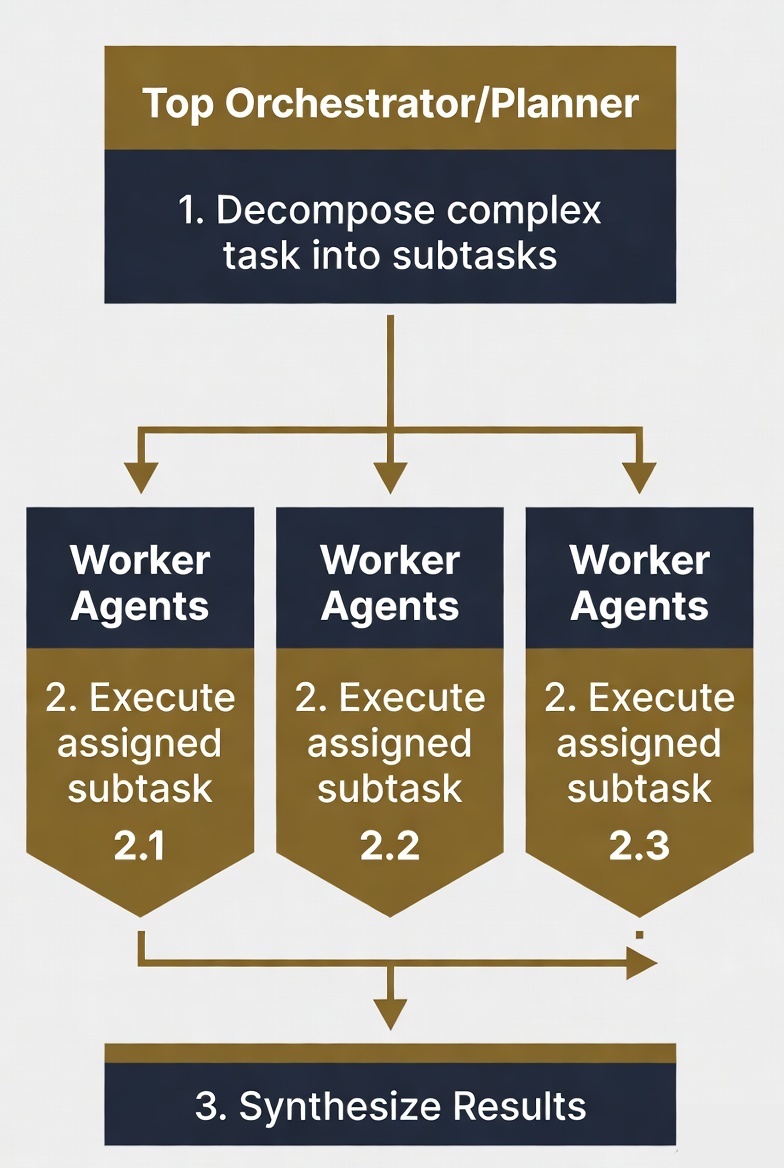
What it is: The agent (orchestrator) first decomposes a complex goal into a structured plan with subtasks, then executes (with optional re-planning). This separates strategy from tactics.
Real-world strategic example: A tech company’s Product Launch Agent breaks “Q3 wearable launch” into 12 subtasks across research, regulatory, marketing, and supply chain. Workers execute in parallel where possible; the orchestrator re-plans on delays, resulting in higher pre-orders.
Strategic payoff: Manages complexity with fewer errors and better dependency handling.
Sequential Workflow (Prompt Chaining) Pattern
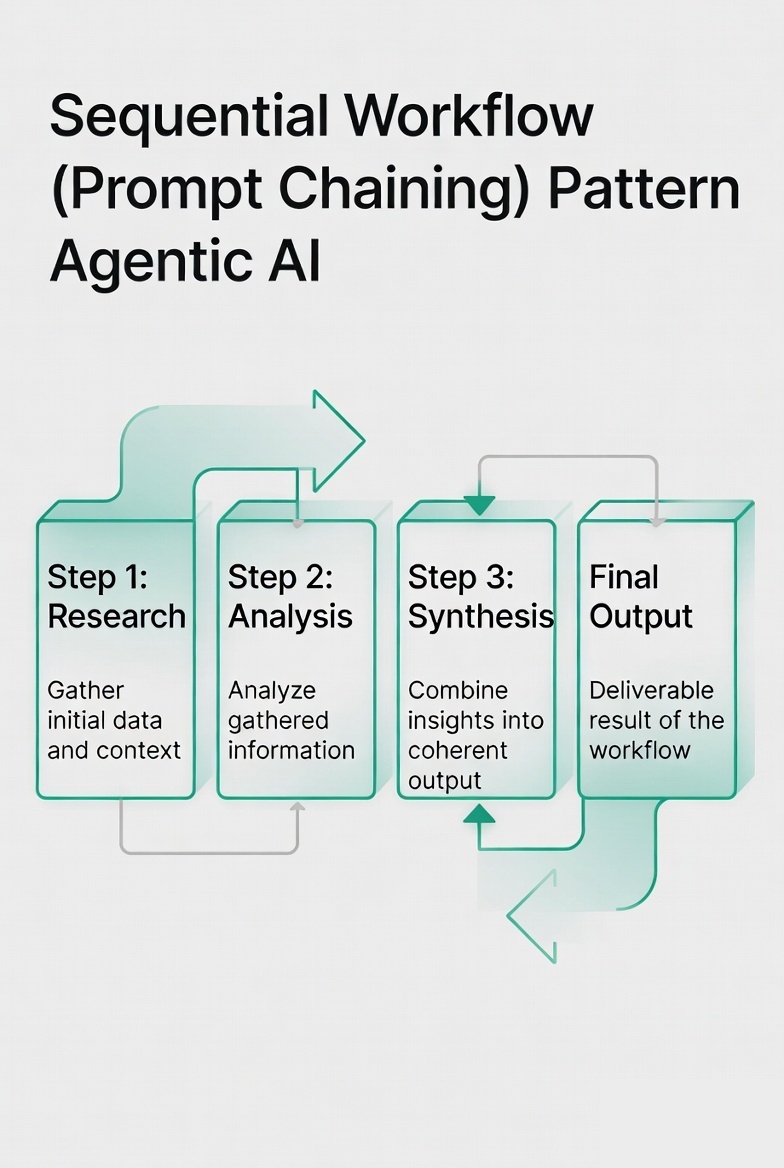
What it is: Tasks flow linearly: output of one step becomes input to the next. Each stage specializes or validates before passing forward. Simple yet powerful for structured processes.
Real-world strategic example: A strategy team’s Report Generation Agent chains: (1) Retrieve market data → (2) Analyze trends → (3) Draft recommendations → (4) Format and cite - producing consistent, auditable quarterly strategy briefings.
Strategic payoff: Reliability and modularity for repeatable processes. Easy to debug.
Parallel Workflow (Scatter-Gather) Pattern
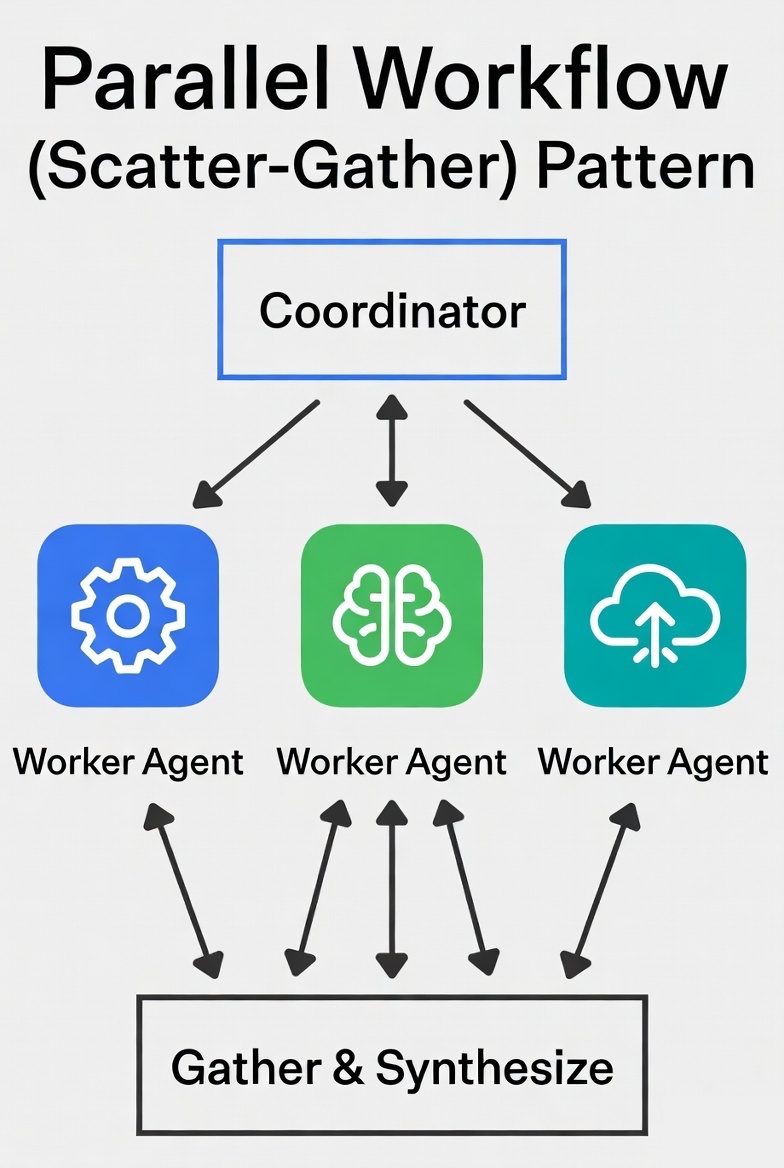
What it is: Multiple independent subtasks run concurrently (scatter), then results are aggregated and synthesized (gather). Ideal for speeding up tasks with separable components.
Real-world strategic example: A retailer’s Competitor Analysis Agent scatters parallel workers to scan pricing, product features, marketing campaigns, and customer reviews simultaneously, then gathers insights into a unified dashboard - slashing analysis time from days to hours.
Strategic payoff: Speed and breadth. Great for multi-source intelligence.
Hierarchical (Supervisor-Worker) Pattern
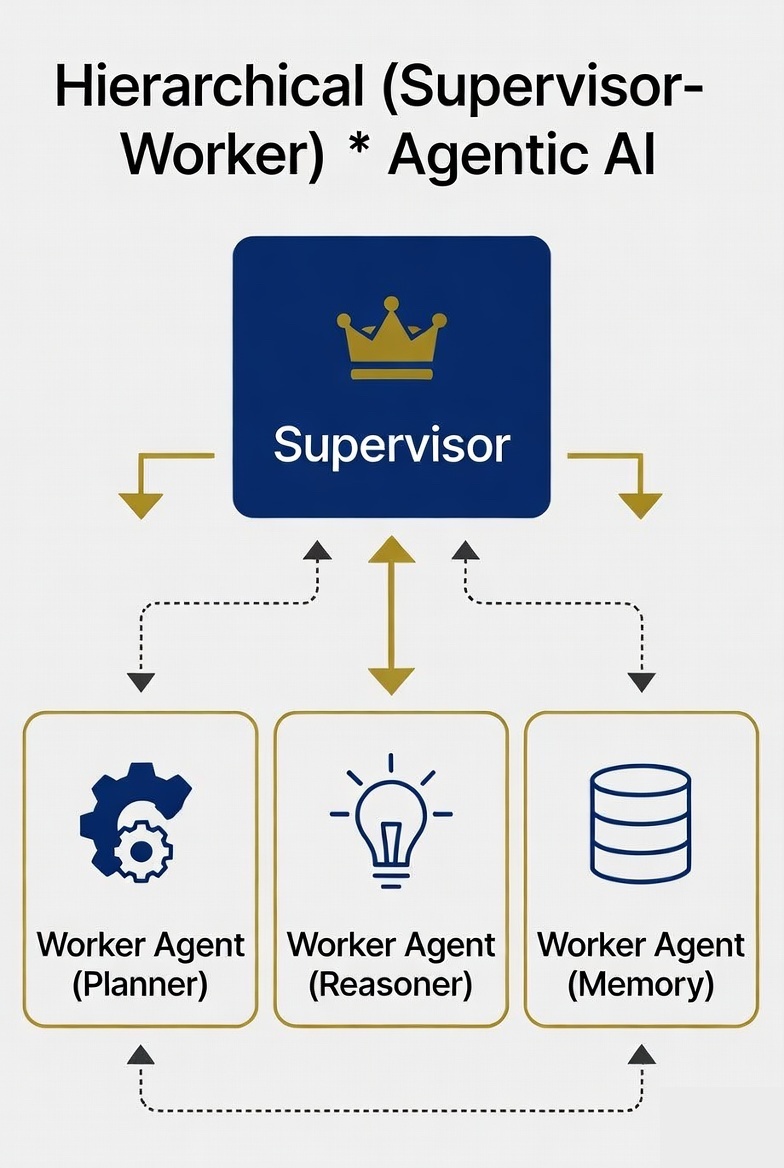
What it is: A supervisor agent decomposes tasks and delegates to specialized worker agents in a tree-like hierarchy. The supervisor monitors, coordinates, and aggregates results.
Real-world strategic example: An energy company’s Sustainability Initiative Agent has a supervisor that breaks goals into regulatory, technical, financial, and communications streams. Workers handle each; the supervisor ensures alignment and resolves cross-dependencies.
Strategic payoff: Clear accountability and scalability for complex, multi-domain initiatives.
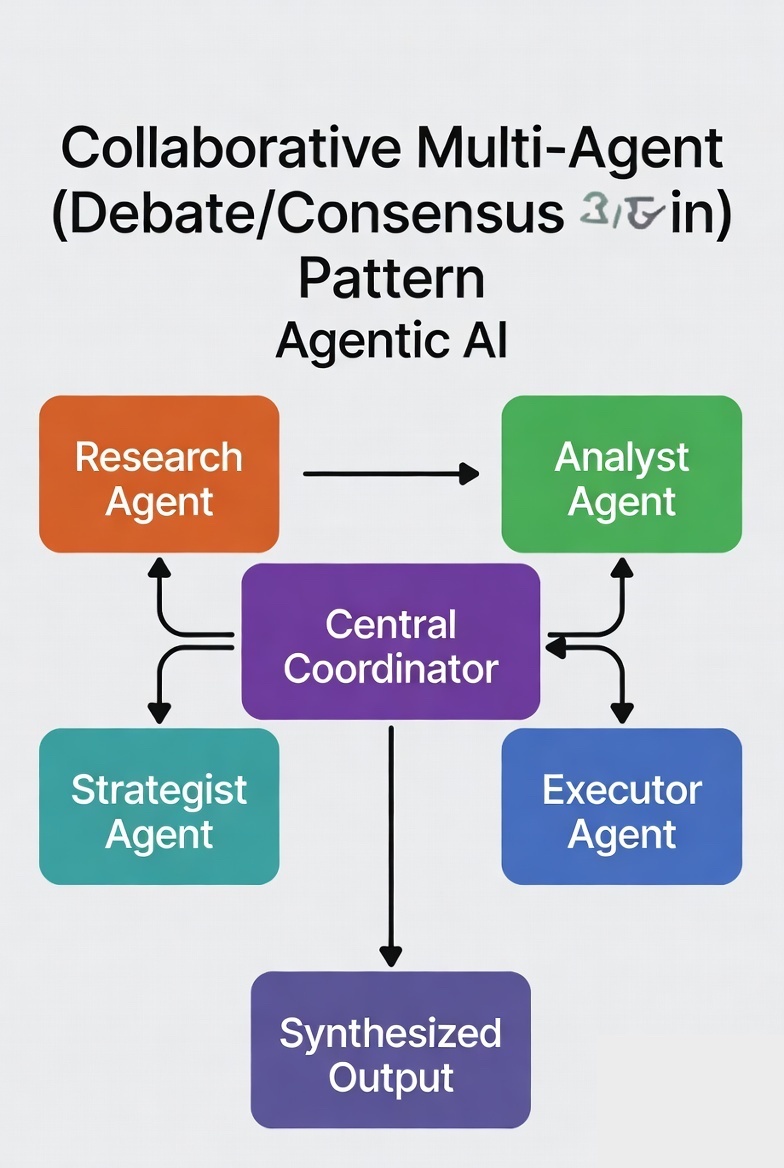
Collaborative Multi-Agent (Debate/Consensus) Pattern
What it is: Specialized agents with distinct roles collaborate - via debate, negotiation, or consensus mechanisms - under a coordinator or peer structure to produce richer outcomes.
Real-world strategic example: A consumer goods company’s Go-to-Market Strategy Team deploys Researcher, Analyst, Psychologist, Modeler, and Executor agents. They debate positioning risks until consensus, delivering a stress-tested strategy in hours.
Strategic payoff: Emergent intelligence and diverse perspectives without large teams.
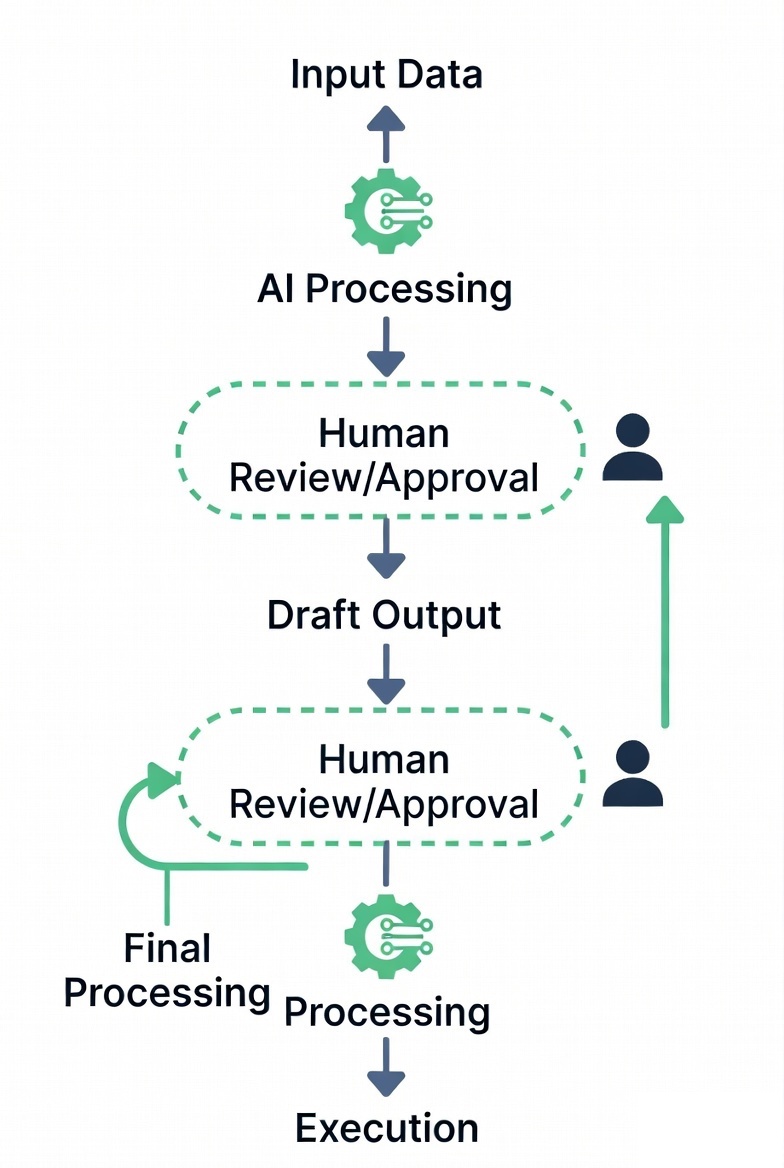
Human-in-the-Loop Pattern
What it is: Strategic checkpoints insert human review, approval, or input into the agent workflow - for oversight, creativity, ethics, or high-stakes decisions.
Real-world strategic example: A pharmaceutical firm’s Clinical Strategy Agent generates trial protocol drafts and risk assessments, but routes high-stakes regulatory or ethical elements to human experts for approval before proceeding - ensuring compliance while accelerating routine work.
Strategic payoff: Trust, governance, and alignment with organizational values. Critical for regulated or high-impact domains.
Strategic Framework: Selecting and Combining Patterns
These patterns are not mutually exclusive — combine them for compound advantage:
Tactical execution
ReAct + Tool Use + Retrieval-Augmented
High-quality deliverables
Reflection + Sequential/Parallel
Complex initiatives
Planning + Hierarchical + Collaborative Multi-Agent
Governed autonomy
Human-in-the-Loop at critical junctures
Decision matrix considerations:
- Task predictability → Sequential or Parallel
- Need for external data → Retrieval + Tool Use
- Risk/quality sensitivity → Reflection + Human-in-the-Loop
- Scale & specialization → Hierarchical or Collaborative Multi-Agent
Organizations that treat these patterns as strategic assets — cataloging them, measuring ROI (time saved, decisions accelerated, risks avoided), and iterating — build defensible AI capabilities.
Agentic AI is now a core competitive lever. These 10 patterns give you the architectural playbook to deploy it responsibly and powerfully.
Which pattern aligns best with your biggest strategic challenge? Describe your use case — the conversation around intelligent systems is just getting started.
Ready to implement? Start with frameworks like LangGraph for graph-based control, CrewAI for role-based teams, or AutoGen for conversational collaboration.
Share this article